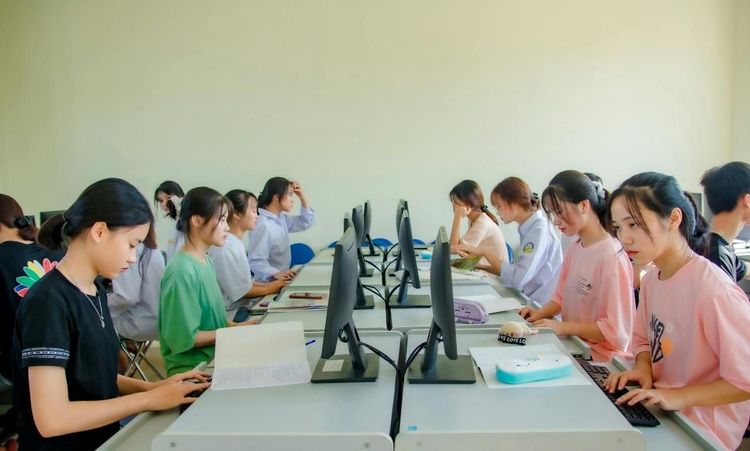
Small differences in how students approach everyday learning often produce remarkably different outcomes over time. Two learners may attend the same classes, read the same textbooks, and complete the same assignments, yet one consistently develops sharper judgment, asks deeper questions, and evaluates information with greater confidence.
These differences rarely arise from intelligence alone. Instead, they emerge through a combination of habits, learning environments, emotional factors, educational experiences, and repeated opportunities to analyze rather than memorize. Understanding these influences offers practical lessons for students, educators, and parents who want to strengthen analytical thinking rather than simply improve test scores.
Critical Thinking Is Built Through Practice, Not Born as Talent
Many people assume that strong analytical ability is an inherited gift. Research paints a far more encouraging picture. While cognitive abilities vary naturally among individuals, critical thinking grows through repeated mental exercise.
Students who regularly compare evidence, evaluate competing explanations, identify assumptions, and reflect on their own reasoning gradually strengthen these abilities much like athletes improve through deliberate training.
The distinction matters because it shifts attention away from labels such as "naturally smart" toward behaviors that anyone can cultivate. Learners who repeatedly encounter situations requiring thoughtful judgment become increasingly comfortable handling complexity.
Rather than searching for the single correct answer immediately, skilled thinkers learn to tolerate uncertainty while gathering better evidence.
Curiosity Creates the Foundation for Better Reasoning
Behind nearly every strong critical thinker lies an active sense of curiosity. Students who genuinely wonder why events occur or how ideas connect naturally explore subjects more deeply than those focused only on passing examinations.
Curiosity changes learning in several important ways.
Instead of accepting information at face value, curious learners ask follow-up questions. They compare different viewpoints, seek additional sources, and often discover relationships that remain invisible to students satisfied with surface-level understanding.
For example, during a history lesson, one student may simply memorize dates for an exam. Another may ask why political leaders made certain decisions, what economic pressures influenced those choices, and how different groups experienced the same event differently. That second approach strengthens reasoning because it demands evaluation rather than recall.
Importantly, curiosity does not require exceptional intelligence. It requires permission to question, investigate, and occasionally remain uncertain.
Learning Environments Shape Analytical Habits
Classrooms differ dramatically in the kinds of thinking they encourage.
Some reward speed, memorization, and arriving quickly at predetermined answers. Others emphasize discussion, evidence, interpretation, and respectful disagreement.
Students exposed to richer intellectual environments gradually develop stronger analytical habits because they repeatedly practice them.
Several classroom characteristics encourage deeper thinking:
- Open-ended discussions instead of exclusively factual questioning.
- Assignments requiring explanation rather than repetition.
- Opportunities to debate multiple perspectives.
- Teachers who welcome thoughtful questions.
- Feedback focused on reasoning instead of only correctness.
Outside school, families can have a similar influence.
Children raised in households where conversations involve explaining opinions, discussing current events, evaluating media claims, or solving everyday problems collaboratively often receive regular practice in logical reasoning without realizing it.
The quality of discussion frequently matters more than the quantity.
Reading Widely Expands Mental Flexibility
Students who read broadly encounter unfamiliar perspectives that challenge existing assumptions.
Fiction introduces complex characters whose motivations resist simple explanations. Nonfiction exposes readers to scientific discoveries, historical debates, ethical questions, and competing interpretations of evidence.
Every new perspective forces readers to reconsider previous beliefs.
Wide reading also improves vocabulary, background knowledge, and comprehension. These abilities make it easier to identify subtle arguments, recognize flawed reasoning, and distinguish evidence from opinion.
Importantly, diversity matters more than volume alone.
A learner who reads across history, science, philosophy, literature, economics, psychology, and journalism develops a richer mental framework than someone who repeatedly consumes only one type of material.
Exposure to different writing styles also teaches readers that complex problems rarely have simplistic solutions.
Productive Struggle Strengthens Intellectual Growth
Many students avoid difficult problems because struggle feels like failure. Yet educational research consistently shows that appropriate levels of challenge contribute to lasting learning.
When students encounter obstacles requiring persistence, they must test ideas, revise assumptions, evaluate mistakes, and adjust strategies.
These experiences strengthen reasoning far more effectively than completing tasks that demand little thought.
The key is productive struggle rather than overwhelming frustration.
Students develop confidence when problems stretch existing abilities without becoming impossible. Skilled teachers often provide guidance while allowing learners enough independence to make meaningful discoveries.
This balance encourages resilience alongside analytical thinking.
Students gradually learn that changing one's mind after evaluating new evidence represents intellectual strength rather than weakness.
Metacognition Helps Students Think About Their Thinking
One of the strongest predictors of effective reasoning is metacognition—the ability to monitor and evaluate one's own thinking processes.
Strong critical thinkers routinely ask themselves questions such as:
- What evidence supports this conclusion?
- Could another explanation fit the facts?
- Am I relying on assumptions?
- What information might be missing?
- How confident should I be?
These internal conversations reduce impulsive judgments.
Rather than accepting the first explanation that seems reasonable, reflective learners pause to evaluate the quality of their reasoning.
Teachers increasingly encourage metacognitive habits through learning journals, self-assessments, peer reviews, and reflective discussions.
Over time, these practices become automatic mental routines that improve decision-making across many subjects.
Emotional Intelligence Influences Rational Judgment
Critical thinking is often described as purely logical, yet emotions influence nearly every decision people make.
Students who recognize emotional reactions without becoming controlled by them generally make better analytical judgments.
For example, confirmation bias encourages individuals to favor evidence supporting existing beliefs. Anxiety can narrow attention, making it harder to evaluate alternatives carefully. Overconfidence may lead students to stop examining evidence too early.
Emotional awareness helps counter these tendencies.
Learners who can tolerate disagreement, uncertainty, and temporary confusion remain open to revising conclusions when stronger evidence appears.
This flexibility becomes especially valuable during group discussions where differing viewpoints challenge personal opinions.
The goal is not eliminating emotion but preventing emotion from replacing careful reasoning.
Technology Can Either Sharpen or Weaken Critical Thinking
Modern technology offers extraordinary educational opportunities while introducing new cognitive challenges.
Students can access academic research, expert lectures, simulations, and international perspectives within seconds. Used thoughtfully, these resources enrich analytical skills.
However, constant exposure to short-form content, algorithm-driven recommendations, and rapid information consumption may encourage superficial processing.
Instead of evaluating sources carefully, some learners become accustomed to accepting whatever appears first in search results or social media feeds.
Digital literacy therefore becomes an essential component of critical thinking.
Students benefit from learning how to:
- Verify information across multiple credible sources.
- Recognize misleading headlines.
- Distinguish evidence from opinion.
- Identify logical fallacies.
- Detect manipulated statistics or images.
- Evaluate author expertise and potential bias.
These skills grow increasingly important as information becomes easier to publish but harder to verify.
Feedback Matters More Than Grades Alone
Grades indicate performance, but thoughtful feedback improves thinking.
Students who receive detailed comments explaining strengths and weaknesses gain valuable insight into how reasoning develops.
Instead of merely learning that an answer was incorrect, they discover why the reasoning fell short.
Effective feedback often addresses questions such as:
- Was the evidence sufficient?
- Were alternative explanations considered?
- Did the conclusion logically follow?
- Were important assumptions overlooked?
Constructive criticism encourages revision rather than discouragement.
Students gradually recognize that improving thought processes is more valuable than protecting the appearance of being correct.
This mindset supports lifelong learning well beyond formal education.
Growth Mindset Encourages Better Intellectual Risk-Taking
Students who believe thinking abilities can improve typically approach challenges differently from those convinced intelligence is fixed.
A growth mindset encourages experimentation, persistence, and willingness to revise conclusions.
Rather than interpreting mistakes as evidence of limited ability, these learners see errors as information.
They ask what went wrong, what evidence they missed, and what strategy could work better next time.
This orientation creates more opportunities for genuine learning.
By contrast, fear of appearing wrong often discourages questioning, experimentation, and thoughtful debate.
Educational environments that celebrate thoughtful revisions instead of flawless first attempts encourage stronger analytical development.
Ultimately, confidence grows not from always being right but from trusting one's ability to reason through unfamiliar situations.
Why Individual Differences Continue Throughout Life
Even after graduation, analytical ability continues evolving through experience.
People whose careers require evaluating evidence, solving unfamiliar problems, collaborating with diverse teams, or making complex decisions often strengthen critical thinking throughout adulthood.
Meanwhile, intellectual growth can stagnate when routines become repetitive and opportunities for reflection diminish.
Fortunately, the habits that encourage better reasoning remain accessible regardless of age.
Reading challenging material, discussing ideas respectfully, questioning assumptions, solving unfamiliar problems, and reflecting on decisions all continue strengthening the mind over time.
The process never truly ends because every new experience introduces fresh opportunities to refine judgment.
Conclusion
Modern education increasingly recognizes that success depends on far more than remembering information. The ability to evaluate evidence, question assumptions, and adapt to new knowledge has become one of the defining advantages in academic, professional, and civic life.
The factors explored throughout this discussion demonstrate that stronger reasoning develops through countless small experiences rather than dramatic breakthroughs. Curious exploration, thoughtful teaching, meaningful feedback, emotional awareness, productive struggle, and reflective habits gradually combine to shape more capable thinkers.
Perhaps the most encouraging insight is that these abilities remain highly responsive to experience. Every classroom discussion, difficult problem, challenging book, or carefully examined mistake offers another opportunity to strengthen the mental habits behind reasons some students develop stronger critical thinking skills than others. As those opportunities accumulate, thoughtful judgment becomes less of a special talent and more of a practiced way of engaging with the world.